Nairobi International Trade Fair 2026: What Stakeholders Said and What It Means for Kenyan Farmers and Exporters
The Nairobi International Trade Fair is widely described as Kenya’s largest annual farm and trade show. Run by the Agricultural Society of Kenya (ASK), it traces its roots back to 1902 — and this year’s 125th edition, held at Jamhuri Park from 28 September to 4 October 2026, put climate-smart agriculture at the centre of the programme.
Beyond the stands, the fair is where government, the organiser and trade bodies set out how they see the sector. This recap pulls together what was said, keeps it separate from our own reading, and spells out what it means in practice for farmers, cooperatives and exporters.
📌 A note on sources. The coverage we could verify centres on the opening address by the Cabinet Secretary for Agriculture and Livestock Development and on statements by the organisers and the export promotion agency. We report only what we could confirm, and everything labelled “our reading” is our interpretation, not a record of what was said. The Cabinet Secretary’s remarks come from a single published report, so check the full address once a transcript is available.
⚡ Key Facts
- 📅 28 Sept – 4 Oct 2026, Jamhuri Park Showground, Nairobi — organised by ASK.
- 🏢 500+ exhibitors reported, with 25+ countries represented.
- 🌦️ Droughts and floods linked to climate variability were reported to cost about 2.8% of GDP a year.
- 🌱 Opening address urged digital tools, scientific soil management and climate-smart practice.
- 🌍 The export promotion agency framed the fair as a route to international markets.
Sources: published coverage of the fair; statements by ASK, the Cabinet Secretary for Agriculture and Livestock Development and KEPROBA. Verified October 2026.
In This Recap
The Event
What the Fair Was
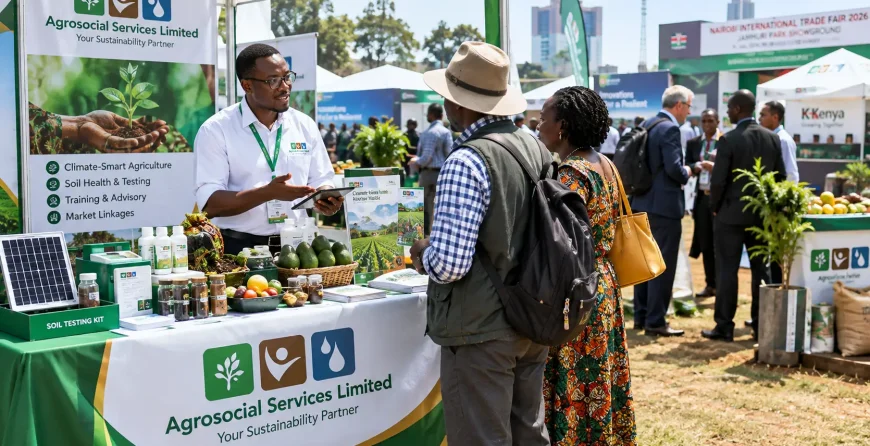
The 2026 edition ran under the theme “Promoting Climate Smart Agriculture and Trade Initiatives for Sustainable Economic Growth”. More than 500 exhibitors were reported, drawn from agriculture, manufacturing, technology, finance, education and other sectors, with more than 25 countries represented — an international presence announced at the exhibitors’ forum ahead of the fair.
The grounds were organised into livestock and crop demonstrations, local manufacturers and services, and international exhibition halls, with live demonstrations, workshops and practical training built around the climate-smart theme. In other words, the organisers positioned it less as a showground and more as a working marketplace for knowledge, technology and capital.
On the Record
What Stakeholders Said
The Agriculture Cabinet Secretary — opening address
Opening the fair on 28 September, the Cabinet Secretary for Agriculture and Livestock Development urged farmers to embrace technology and climate-smart agriculture as climate risks intensify. As reported, the Cabinet Secretary warned that droughts and floods linked to climate variability cost the economy about 2.8% of GDP each year, and pointed farmers toward digital tools, scientific soil management and innovative practices to cope with erratic weather, rising production costs and declining soil fertility.
Reporting also linked the fair’s focus to government efforts to strengthen digital infrastructure for farmer identification, insurance and finance — a thread we return to below.
ASK leadership — a marketplace, not just a show
Ahead of the fair, ASK set out its intention to reposition the event as a marketplace for investment, exports, partnerships and innovation, while upgrading ageing infrastructure at Jamhuri Park. The society’s chief executive described a modernisation programme under its 2025–2029 strategic plan covering roads, water infrastructure and exhibition facilities. The fair’s chairman called it a platform for showcasing products, technologies and ideas that creates openings for business, learning and partnership.
KEPROBA — taking Kenyan products abroad
The chief executive of the Kenya Export Promotion and Branding Agency (KEPROBA) said the fair gives Kenyan businesses an opportunity to strengthen their presence in international markets and promote locally made products. The agency backs the fair through its Made in Kenya initiative.
Free Download
Evidence is the new entry ticket
Buyers, funders and insurers all ask for records. Our free guide covers the 25 record-keeping gaps that fail Kenyan farm audits.
Analysis
Our Reading: Five Takeaways
Everything in this section is our interpretation, not a report of what was said.
1. Climate-smart is now the shared language — and evidence is the entry ticket
Government, the organiser and the export agency all framed the sector in climate-smart terms, and buyers and funders are moving the same way. The practical consequence is that claims about sustainable practice increasingly need proof: dated records, soil data and documented changes in practice. Farmers and cooperatives that already keep audit-grade records for certification are most of the way there — our guide to building an Internal Control System shows what that looks like for a group.
2. Soil is the quiet headline
Declining soil fertility sat alongside weather and rising costs among the problems flagged. Soil is also where regenerative and carbon-farming practices begin, and where measurement decides what any scheme actually pays. Start with a soil test and a written baseline. Our practical guide to soil management and our carbon farming guide explain the practices and the economics.
3. Digital identity, insurance and finance are converging
If farmer identification, insurance and finance increasingly run on digital systems, then an accurate, current register of who farms what, and where, stops being paperwork and becomes the gateway to cover and credit. Insurance is the clearest example: subsidised programmes exist, yet formal agricultural insurance penetration remains below 1% — see our guide to crop insurance in Kenya. Our view: groups with out-of-date member registers and unmapped plots risk being last in line.
4. The export push raises the compliance bar — it does not lower it
Promoting Kenyan products abroad is welcome, but export buyers contract with verified, documented suppliers, not with enthusiasm. Visibility at a fair does not replace certification, traceability or consistent volume. Our guide on how to start an agricultural export business sets out the right sequence, Sourcing from Kenya shows what international buyers actually check, and our Gulf export guide covers one market where the entry bar is lower than the EU’s but still real.
5. A booth is not a buyer — verify before you share
Fairs generate contacts quickly and verification slowly. Be cautious with unsolicited agents who ask for price lists, certificates and capacity figures before telling you who the buyer is, or who lead with a fixed commission. Ask for the buyer’s registered company details, check trade references, and share pricing only with a verified counterparty.
Practical Steps
What to Do This Quarter
Farmers
- Get a soil test and write down your baseline before the next planting season.
- Keep dated records of inputs, sprays and harvests — even simple ones.
- Ask your county agricultural office which insurance programmes are active locally.
Cooperatives
- Refresh the member register: names, plots, crops and acreage.
- Check that your records could survive an audit, a buyer visit or a funder’s review.
- Find out whether group-level insurance or aggregated cover is available to you.
Exporters
- Prepare a one-page capability sheet listing certificates, volumes and seasons.
- Follow up every fair contact within 48 hours — then verify before you share prices.
- Check which of your licences, certificates and registrations fall due before year-end.
Looking Ahead
What We’re Watching Through Year-End
- The coffee regulator transition. The Coffee Act 2023 created the Coffee Board of Kenya to replace the AFA Coffee Directorate — read what changed for growers and exporters.
- EUDR application dates. The current dates are 30 December 2026 for large and medium operators and 30 June 2027 for small and micro operators. Confirm the latest EU position before relying on them — our EUDR guide is kept current.
We will update this page as reporting from the fair, and policy that follows from it, develops.
Get your records and compliance in order before the next season
We assess where your farm or cooperative actually stands against the standard buyers, funders and insurers expect — and build the systems to close the gaps.
Quick Answers
Frequently Asked Questions
When and where was the 2026 Nairobi International Trade Fair held?
The 125th edition ran from 28 September to 4 October 2026 at the Jamhuri Park Showground off Ngong Road, Nairobi, organised by the Agricultural Society of Kenya. The theme was promoting climate-smart agriculture and trade initiatives for sustainable economic growth, with more than 500 exhibitors and over 25 countries reported.
What did the Agriculture Cabinet Secretary tell farmers?
The Cabinet Secretary urged farmers to embrace technology and climate-smart agriculture as climate risks intensify. As reported, droughts and floods linked to climate variability were said to cost about 2.8% of GDP a year, and digital tools, scientific soil management and innovative practices were pointed to as ways to cope with erratic weather, rising costs and declining soil fertility.
What does the climate-smart focus mean for farmers selling to export buyers?
Claims about sustainable practice increasingly need evidence. Buyers, certification bodies and funders look for dated records, soil and input data and documented changes in practice. Farmers and cooperatives that already keep audit-grade records for certification are well placed; those that do not should start now.
How should exporters follow up contacts made at a trade fair?
Within 48 hours, with a one-page capability sheet. Verify the buyer’s registered company details and trade references before sharing prices, and be cautious with unsolicited agents who ask for price lists and certificates up front or press a fixed commission. A booth conversation is a lead, not a contract.
Key Takeaways
- Climate-smart is the common language — and it needs evidence behind it.
- Soil is the quiet headline. Test it and write down a baseline.
- Digital identity, insurance and finance are converging — keep registers and plot records current.
- The export push raises the compliance bar, it does not lower it.
- A booth is not a buyer. Verify before you share prices.
Related Guides & Resources
Export & Markets
Agricultural Export from Kenya
How to Start an Export Business
For International Buyers
Work With Us
Published October 2026 by Agrosocial Services. Compiled from published coverage of the 2026 Nairobi International Trade Fair and statements by the Agricultural Society of Kenya, the Cabinet Secretary for Agriculture and Livestock Development and the Kenya Export Promotion and Branding Agency. The Cabinet Secretary’s remarks are drawn from a single published report and should be checked against the full address. Attended a session we have not covered? Email info@agrosocialservices.co.ke and we will extend this recap. Agrosocial Services is an independent agricultural certification and compliance consultancy and is not affiliated with ASK or KEPROBA.