Rainforest Alliance Certification Kenya 2026 — The Complete Guide for Coffee, Tea, Flower and Horticultural Farms
🌿 Standard: Rainforest Alliance SAS 2020 | 🇰🇪 Crops: Coffee, Tea, Flowers, Avocado, Macadamia | 💰 Group cost: KES 8,000–18,000/farmer | 📅 Updated: May 2026 | ⏱ Read time: 14 minutes
In This Guide
- Key Facts — The 2026 Standard
- What Is Rainforest Alliance Certification?
- The Sustainable Agriculture Standard Explained
- Who in Kenya Needs RA Certification?
- Rainforest Alliance vs GLOBALG.A.P — The Key Differences
- RA Certification for Kenyan Coffee Farms
- RA Certification for Kenyan Tea Estates
- RA Certification for Kenyan Cut Flower Farms
- RA for Avocado and Macadamia
- Costs and Timelines — Real 2026 Numbers
- Step-by-Step Certification Process
- Common Challenges on Kenyan Farms
- Frequently Asked Questions
⚡ Key Facts — The 2026 Rainforest Alliance Standard
- Current standard: Rainforest Alliance Sustainable Agriculture Standard (SAS) 2020, which replaced the previous separate Rainforest Alliance and UTZ Certified standards. All new and renewal audits are against SAS 2020.
- Key Kenyan crops: Coffee (Embu, Kirinyaga, Nyeri, Kiambu), tea (Kericho, Kisii, Nakuru), cut flowers and ornamentals (Nakuru, Kiambu), avocado (for sustainability-focused EU buyers), and macadamia.
- Cost structure: Differs from GLOBALG.A.P — includes an annual Rainforest Alliance license fee (0.5–1.5% of certified sales revenue) alongside preparation and audit fees.
- Scoring system: SAS uses a mandatory plus scoring approach — all must-have requirements must be met, plus farms must achieve a minimum score across optional practices. Farms improve their score over successive certification cycles.
- Dual certification: Many Kenyan flower and avocado farms hold both GLOBALG.A.P and Rainforest Alliance. The certifications have significant overlapping requirements — dual certification costs less than two entirely separate programmes.
- EUDR alignment: Rainforest Alliance SAS 2020 includes deforestation-free requirements that partially support EUDR compliance documentation — but does not fully substitute for EUDR due diligence requirements.
Rainforest Alliance certification is one of the most recognised sustainability standards in global agriculture — and for Kenyan coffee cooperatives, tea estates, and cut flower farms, it is increasingly not optional. Major European coffee roasters including Nespresso, Starbucks, and JDE Peet’s have sustainability sourcing commitments that require RA certification. UK tea brands including PG Tips, Yorkshire Tea, and Twinings list Rainforest Alliance as their primary sustainability certification. The world’s largest flower auction — Aalsmeer in the Netherlands — gives pricing advantages to RA-certified flowers.
For Kenyan farms already holding GLOBALG.A.P certification, Rainforest Alliance is often the natural next step in expanding market access. The two standards have significant overlapping requirements — farms with strong GLOBALG.A.P compliance systems move through the Rainforest Alliance process significantly faster than farms starting from scratch. For Kenyan coffee and tea cooperatives not yet engaged with any international certification standard, Rainforest Alliance is frequently the highest-priority first certification — particularly for cooperatives whose buyers are specifically requesting it.
This guide explains everything Kenyan farms and cooperatives need to know about Rainforest Alliance certification in 2026 — the current standard, who needs it, what it costs, how long it takes, the crop-specific requirements for coffee, tea, and flowers, and how it relates to the other certifications your farm may already hold or be pursuing.
📩 Get our free Rainforest Alliance Kenya Readiness Checklist — delivered instantly
A one-page summary of the Rainforest Alliance SAS 2020 must-have requirements for Kenyan coffee, tea, and flower farms. Free, instant delivery.
The Market Access Reality in 2026
Major EU and UK coffee roasters, tea brands, and flower buyers
now list Rainforest Alliance certification as a supplier
qualification condition — not a preference.
For Kenyan coffee cooperatives in Kirinyaga, Embu, and Kiambu — and tea smallholders in Kisii and Nakuru — Rainforest Alliance certification is the difference between maintaining your current buyer relationship and losing it to a certified competitor.
What Is Rainforest Alliance Certification?
Rainforest Alliance is an international non-governmental organisation founded in 1987 that operates a certification programme for agricultural farms and forestry operations. RA certification verifies that a certified farm meets the Rainforest Alliance’s Sustainable Agriculture Standard — a comprehensive framework covering environmental protection, social responsibility, economic viability, and farm management systems.
The Rainforest Alliance Certified seal — the green frog logo familiar on coffee, tea, and chocolate packaging worldwide — is a consumer-facing sustainability claim used by food and beverage companies to signal that the agricultural ingredients in their products were sourced from farms that meet RA’s sustainability requirements. When a Kenyan coffee cooperative achieves Rainforest Alliance certification, its certified coffee can be used by roasters who sell products carrying the RA Certified seal — giving those roasters a verified sustainability sourcing claim.
The 2020 standard unification: In 2020, Rainforest Alliance merged with UTZ Certified — another major agricultural sustainability standard that was particularly strong in Kenyan tea and coffee. The combined Sustainable Agriculture Standard (SAS) replaced both the previous Rainforest Alliance standard and UTZ Certified. Kenyan farms previously certified under UTZ have been re-audited against the unified SAS. All new certifications and renewals in Kenya are now against SAS 2020 — not the previous separate standards.
The Sustainable Agriculture Standard — What It Covers
The Rainforest Alliance Sustainable Agriculture Standard (SAS) 2020 is organised around six thematic areas. Understanding each area tells you exactly what your farm needs to demonstrate during an RA audit.
1. Smart Management
A documented farm management system covering risk identification, management objectives, continuous improvement commitments, and a farm management plan. Farms must demonstrate that they manage operations systematically — not reactively. The farm management plan is the RA equivalent of GLOBALG.A.P’s self-assessment document — it is the first document an RA auditor reviews. Farms with an existing GLOBALG.A.P farm record system have a significant head start on this requirement.
2. Better Livelihoods and Human Rights
Worker welfare requirements covering wages (progress toward a living wage — not just minimum wage), worker training and safety, freedom of association and collective bargaining, gender equity, prohibition of child labour and forced labour, grievance mechanisms, and safe working conditions. The living wage requirement is one of the most discussed aspects of SAS 2020 — RA does not mandate that farms immediately pay a living wage, but requires documented progress toward one over successive certification cycles. This is an area where many Kenyan farms — particularly tea smallholder cooperatives — face genuine improvement challenges.
3. Natural Ecosystems and Biodiversity
Deforestation prohibition — a critical requirement under SAS 2020 directly aligned with EUDR requirements. No deforestation of natural ecosystems after November 2014 (the RA cut-off date — stricter than EUDR’s December 2020 cut-off). Protection of ecosystem services, biodiversity-friendly production, wildlife-friendly management zones, and prohibition of hunting on certified farms. For Kenyan coffee farms in highland forest areas of Embu and Kirinyaga, the natural ecosystem section is straightforward — most farms are not deforesting and can demonstrate this through land use documentation.
4. Soils and Water
Soil health management, erosion prevention, pesticide use reduction, banned pesticide list compliance (RA maintains a list of prohibited active ingredients that is more extensive than Kenya’s PCPB restricted list), water source protection and monitoring, and responsible use of agrochemicals. The RA banned substances list includes several active ingredients commonly used on Kenyan farms — a comprehensive pesticide programme review before pursuing RA certification is essential. This review overlaps directly with the MRL compliance review required for GLOBALG.A.P MRL compliance.
5. Climate
Greenhouse gas emission monitoring, energy efficiency, climate adaptation planning, and documentation of practices that build climate resilience. The climate thematic area is the newest major addition in SAS 2020 compared to the previous standards. For most Kenyan smallholder farms, the primary climate requirement at initial certification is documenting existing practices that support climate resilience — shade trees on coffee farms, soil health practices — rather than implementing entirely new climate programmes.
6. Shared Responsibility
Supply chain transparency, buyer responsibilities under the RA programme, and the farm’s responsibilities to the communities it operates within. For Kenyan cooperatives, this section primarily covers how the cooperative shares RA-related information with its member farmers and buyer relationships.
Who in Kenya Needs Rainforest Alliance Certification?
Unlike GLOBALG.A.P which is driven by fresh produce buyer requirements, Rainforest Alliance is primarily driven by food and beverage company sourcing commitments. The following Kenyan farm and cooperative types most commonly face buyer requirements for RA certification.
| Farm Type | Who Requires RA | Key Kenya Counties | Priority |
|---|---|---|---|
| Coffee cooperatives and estates | Nespresso, Starbucks, JDE Peet’s, Lavazza, specialty EU roasters | Kirinyaga, Nyeri, Embu, Kiambu | Critical |
| Tea estates and KTDA smallholder cooperatives | PG Tips, Yorkshire Tea, Tetley, Twinings, Lipton (Ekaterra) | Kericho, Kisii, Nakuru, Nandi | Critical |
| Cut flower and ornamental farms | Aalsmeer flower auction, sustainability-focused European florists | Nakuru, Kiambu | High |
| Avocado cooperatives targeting EU sustainability buyers | Organic plus sustainability EU retailers, Fair Trade focused buyers | Kiambu, Embu, Meru | Growing |
| Cocoa farms (Western Kenya) | Major EU chocolate manufacturers (Nestlé, Mondelez, Mars, Lindt) | Kakamega, Vihiga, Busia | High |
Rainforest Alliance vs GLOBALG.A.P — The Key Differences Every Kenyan Farm Manager Must Understand
The question Agrosocial Services most frequently receives from Kenyan cooperative managers is: “Do I need GLOBALG.A.P or Rainforest Alliance — or both?” The answer depends entirely on your crop and your target buyer. Here is the clearest possible comparison.
| Factor | Rainforest Alliance | GLOBALG.A.P |
|---|---|---|
| Primary focus | Sustainability, biodiversity, social equity | Food safety, good agricultural practice, traceability |
| Primary buyer type | Food/beverage brands (coffee roasters, tea companies, chocolate manufacturers) | Fresh produce buyers (supermarkets, import distributors) |
| Key Kenyan crops | Coffee, tea, cocoa, flowers | Avocado, French beans, mango, passion fruit, flowers |
| Cost structure | Audit fee + annual RA license fee (% of sales) | Audit fee + GLOBALG.A.P annual registration fee (fixed) |
| Price premium mechanism | Market access to sustainability buyers (not a fixed premium) | Market access to fresh produce export buyers (not a fixed premium) |
| Deforestation requirement | Cut-off date: November 2014 | Not a primary requirement (handled by EUDR separately) |
| Living wage requirement | Required — documented progress toward living wage | Minimum wage compliance required; living wage not mandated |
| Farms that need both | Cut flower farms (RA for sustainability buyers + GLOBALG.A.P for fresh produce buyers). Avocado farms targeting sustainability-focused EU buyers. Any farm supplying buyers with requirements for both food safety and sustainability certification. | |
📖 Related: For a full head-to-head comparison of both standards — including which one to pursue first, which generates better ROI for Kenyan farms, and how to manage dual certification efficiently — our dedicated Rainforest Alliance vs GLOBALG.A.P Kenya guide is coming in June 2026. WhatsApp us to be notified when it is published →
Rainforest Alliance Certification for Kenyan Coffee Farms
Kenya’s coffee sector — concentrated in Kirinyaga, Nyeri, Embu, Muranga, and Kiambu — is one of the world’s most celebrated specialty coffee origins. Kenyan AA and AB grades command significant premiums in European specialty markets. Rainforest Alliance certification is increasingly the price of entry for supply relationships with major EU roasters who have made RA certification a sourcing policy commitment.
Coffee-specific SAS requirements that most affect Kenyan farms
Shade tree management
RA SAS encourages (but does not mandate at initial certification) shade tree coverage on coffee farms as a biodiversity and climate adaptation measure. Kenyan coffee farms in highland areas often have natural shade trees from the original forest edge — document these and include them in your Biodiversity Action Plan. Farms without shade trees should begin a systematic shade tree planting programme as part of their continuous improvement commitment.
Wet mill wastewater management
Coffee processing generates significant volumes of wastewater (mucilage) that can severely contaminate rivers and streams if released untreated. RA requires documented wastewater management — typically either wastewater treatment systems (soak pits, biogas digesters) or dry processing methods that eliminate wastewater. This is one of the most significant infrastructure requirements for Kenyan wet mill cooperatives. Many Kenyan cooperatives share a central wet mill — ensure the cooperative’s wet mill is included in the certification scope and that wastewater management is documented.
EUDR alignment opportunity
RA SAS’s deforestation prohibition (cut-off: November 2014) and land use documentation requirements overlap significantly with EUDR due diligence requirements. RA-certified Kenyan coffee farms with documented land use history and GPS coordinates for all production plots have a significant head start on EUDR compliance — but must still supplement with EUDR-specific deforestation evidence documentation and formal due diligence statements.
📖 Also read: Kenya’s coffee exporters face both EUDR compliance and Rainforest Alliance certification requirements simultaneously in 2026. Our EUDR compliance guide for Kenyan coffee exporters explains how to build both compliance systems from the same farm documentation foundation — reducing total effort and cost compared to building them separately.
Rainforest Alliance Certification for Kenyan Tea Estates and Smallholder Cooperatives
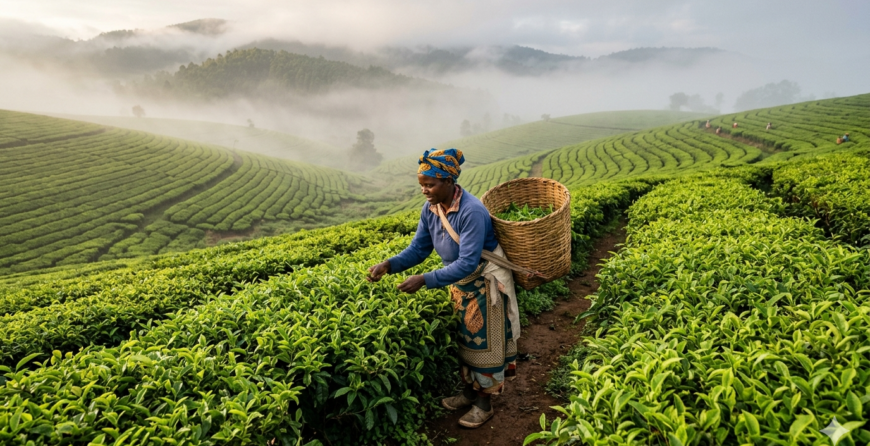
Kenya is the world’s third largest tea producer and the largest exporter of black tea. Most Kenyan tea — from the large estates of Kericho and the smallholder cooperatives of Kisii and Nakuru — flows to UK and European tea brands. Rainforest Alliance certification is a standard requirement for supply relationships with the UK’s four largest tea brands (PG Tips, Yorkshire Tea, Tetley, and Twinings) and most major EU private label tea buyers.
Tea-specific SAS requirements that most affect Kenyan cooperatives
Living wage documentation and progress
The living wage requirement is the most commercially challenging aspect of RA certification for Kenyan tea smallholder cooperatives. RA requires documented progress toward a living wage benchmark — not immediate payment at the living wage level. Cooperatives must document current wage levels, compare them to the established living wage benchmark for their region, and present a credible improvement plan. KTDA-affiliated cooperatives operating under the KTDA bonus payment system need to document how the total annual payment (green leaf payment plus bonus) compares to the living wage benchmark.
Factory inclusion in certification scope
Kenyan tea cooperatives typically include both the member farmers and the cooperative-owned factory (KTDA factory or independent) in their certification scope. The factory must meet RA requirements for worker welfare, environmental management, and energy efficiency in addition to the farm-level requirements. Include your factory manager in all pre-audit preparation activities.
Combined RA and Fairtrade certification
Many Kenyan tea cooperatives pursue both Rainforest Alliance and Fairtrade certification simultaneously. The two standards have significant overlapping requirements — particularly in worker welfare, environmental management, and record-keeping. A cooperative that builds its management system to satisfy both standards simultaneously reduces total certification cost and effort compared to pursuing them sequentially. Agrosocial Services can advise on dual-standard preparation programmes for Kenyan tea cooperatives.
Rainforest Alliance Certification for Kenyan Cut Flower Farms
Kenya is one of the world’s largest cut flower exporters — primarily roses, alstroemeria, and Gypsophila — from the lake-shore growing zones of Nakuru and the highland farms of Kiambu. Kenyan cut flower farms face the most complex certification landscape of any commodity — typically required to hold both GLOBALG.A.P (for food safety and traceability) and Rainforest Alliance (for sustainability) simultaneously. The Netherlands’ Aalsmeer flower auction — through which most Kenyan flowers reach European consumers — gives pricing advantages to flowers from certified farms and is progressively tightening its sustainability requirements. See our complete rose and cut flower export guide for Kenya for the full certification requirements.
Flower-specific SAS requirements
Pesticide management — the highest-scrutiny area for flower farms
Kenyan flower farms use intensive pesticide programmes to maintain the bloom quality and pest-free status required by flower buyers. RA SAS requires a documented IPM programme, an approved pesticides list aligned with RA’s banned substances list, documented pest monitoring and threshold-based spray decisions, and comprehensive operator safety training. The RA banned substances list for ornamentals includes several compounds actively used on Kenyan flower farms — a full pesticide programme review is essential before beginning RA certification preparation.
Worker welfare in the greenhouse environment
Greenhouse environments on Kenyan flower farms present specific worker welfare risks — heat stress, chemical exposure, and ergonomic hazards from repetitive harvesting and grading tasks. RA requires documented risk assessments for greenhouse working conditions, rest periods, adequate ventilation, and PPE protocols specific to greenhouse pesticide applications. Worker interviews during RA audits focus heavily on whether workers understand their rights, how to use PPE, and who to report grievances to.
Rainforest Alliance for Avocado and Macadamia — A Growing Requirement
Rainforest Alliance certification for Kenyan avocado and macadamia is not yet as universally required as GLOBALG.A.P — but is growing as a buyer requirement among sustainability-focused EU retailers and premium specialty food companies. Organic certification is also increasingly combined with RA for avocado targeting the German and Swiss premium sustainability market segments.
For avocado cooperatives in Kiambu, Embu, and Meru that already hold GLOBALG.A.P certification, Rainforest Alliance is the most efficient next certification to pursue — because the two standards share significant documentation requirements and the incremental effort for RA after GLOBALG.A.P is substantially lower than starting from scratch.
Rainforest Alliance Certification Costs in Kenya — Real 2026 Numbers
RA certification costs in Kenya follow a similar structure to GLOBALG.A.P but with one key additional element — the annual Rainforest Alliance license fee based on certified sales revenue. Understanding this cost structure before committing is essential for cooperative budget planning.
| Cost Component | Individual Farm | Group (per farmer, 40 members) | Notes |
|---|---|---|---|
| Preparation and consultancy | KES 50,000–150,000 | KES 3,000–7,000 | Lower for farms with existing GLOBALG.A.P systems |
| Certification body audit fee | KES 30,000–90,000 | KES 2,500–5,000 | Varies by CB and group size |
| Rainforest Alliance license fee | 0.5–1.5% of certified sales | 0.5–1.5% of certified sales | Unique to RA — charged annually on certified revenue |
| Laboratory testing | KES 15,000–40,000 | KES 800–2,000 | Water, soil, and produce testing |
| Infrastructure upgrades | KES 10,000–60,000 | KES 3,000–8,000 | Wastewater management, PPE, signage |
| Total first-year cost (excl. license fee) | KES 105,000–340,000 | KES 9,300–22,000 per farmer | License fee added based on certified sales volume |
The license fee in practice: For a Kenyan coffee cooperative selling KES 10 million in certified coffee annually, the RA license fee at 1% is KES 100,000 per year. This fee is the mechanism by which Rainforest Alliance funds its global operations and certification programme. It is non-negotiable but can be incorporated into your product pricing — buyers purchasing RA-certified coffee effectively absorb the license fee through the price premium their sustainability commitment supports.
For full budget planning guidance including how to fund RA certification costs through AFC loans and development programme grants, see our certification budget planning guide for Kenya 2026.
📋 Preparing for Rainforest Alliance? Start With the Right Tools
The Agrosocial Starter Kit includes our Kenya Farm Audit Checklist (IFA v6 aligned — with significant overlap with RA SAS 2020 requirements), all 7 farm record templates, the agricultural funding proposal template, and the Kenya export market guide. For farms pursuing Rainforest Alliance after GLOBALG.A.P, the Starter Kit provides the foundation documentation system that supports both certifications. Instant download, M-Pesa accepted.
Download Starter Kit — KES 6,000 →
Farm Audit Checklist — KES 3,500
Rainforest Alliance Certification Process — Step by Step for Kenyan Farms
Step 1 — Register on the Rainforest Alliance platform and select a certification body
Register your farm or cooperative at ra.org and generate your farm profile. The platform determines which SAS requirements apply based on your crop type and farming structure. Select an accredited certification body — Control Union Kenya, SGS Kenya, and Bureau Veritas Kenya all conduct RA audits in Kenya. Get quotes from at least two before committing. Timeline: 1–2 weeks.
Step 2 — Conduct your self-assessment and identify all gaps
Use the RA self-assessment tool to assess your current compliance status against all must-have requirements and the scoring criteria. Identify all must-have gaps — these must all be closed before the external audit. Identify scoring gaps — areas where additional practices would improve your score. Timeline: 2–4 weeks.
Step 3 — Implement corrective actions for all must-have gaps
Address every must-have gap identified in the self-assessment. Priority areas for most Kenyan farms: pesticide programme review against RA banned substances list, living wage documentation and improvement plan, wastewater management (coffee), worker welfare upgrades, and deforestation evidence collection. Timeline: 6–16 weeks depending on the number and complexity of gaps.
Step 4 — Prepare documentation and build your record system
Build your farm management plan, pesticide records, worker training records, and all other SAS documentation requirements. If you already hold GLOBALG.A.P certification, your existing farm record system provides the foundation — add RA-specific documentation (deforestation evidence, living wage assessment, biodiversity plan) on top of existing records. Timeline: 4–8 weeks.
Step 5 — Schedule and complete the external audit
Schedule your external audit only after all must-have non-conformances are closed. The audit covers documentation review, farm walk, worker interviews, and management interviews. Allow 1–3 audit days depending on farm or group size. Ensure all key staff are present and prepared. For group certification, ensure a representative sample of member farms are available for the auditor’s random inspection. Timeline: 1–3 audit days, plus 2–4 weeks scheduling lead time.
Step 6 — Address non-conformances and receive certificate
Address any non-conformances identified in the audit report within the timeframes specified. Submit corrective action evidence to the certification body. Once all must-haves are confirmed compliant and your score meets the minimum threshold, your Rainforest Alliance certificate is issued. You receive your RA license and can apply the RA Certified seal to your certified products. Timeline: 2–6 weeks post-audit. Total certification timeline: 4–8 months from registration to certificate.
Book a Rainforest Alliance Compliance Assessment
Agrosocial Services provides Rainforest Alliance certification support for Kenyan coffee cooperatives, tea estates, cut flower farms, and horticultural exporters. Our pre-certification gap assessment — conducted on-site across Embu, Kirinyaga, Kiambu, Kisii, and Nakuru — identifies every must-have gap and gives you a clear implementation plan and timeline before you spend anything on the formal certification process.
Common Rainforest Alliance Certification Challenges on Kenyan Farms — and How to Address Them
Challenge 1 — Living wage documentation
The living wage requirement is the most commonly cited challenge by Kenyan cooperative managers. Many Kenyan tea and coffee smallholder cooperatives pay green leaf prices that fall below established living wage benchmarks for their region. The solution: document your current payment system comprehensively, identify the gap between current payment and the living wage benchmark, and develop a credible multi-year improvement plan with specific milestones. RA auditors assess whether the farm is on a credible path toward the living wage — not whether it has already achieved it.
Challenge 2 — Pesticide programme alignment with RA banned substances list
The RA banned substances list for agricultural applications includes several compounds legally registered by PCPB in Kenya. Farms must remove all RA-prohibited active ingredients from their pesticide programme before the certification audit. This requires identifying compliant alternatives, training spray operators on new product usage and dosages, and updating spray equipment calibration records. Allow 6–12 weeks minimum for a full pesticide programme transition. The RA banned substances list is available at ra.org/sacc.
Challenge 3 — Deforestation evidence for smallholder cooperatives
Demonstrating that all member farms have not deforested after November 2014 requires GPS coordinates and satellite imagery analysis for every member’s production area. For large cooperatives with 500+ member farmers spread across multiple sub-counties, GPS data collection is a significant logistical exercise. The same GPS data collection exercise simultaneously supports EUDR compliance — begin the GPS collection programme as a dual-purpose exercise covering both RA and EUDR requirements.
Challenge 4 — Wastewater management (coffee wet mills)
Coffee processing wastewater from Kenyan wet mills frequently contaminate local waterways without adequate treatment systems. Constructing a compliant wastewater management system — typically a soak pit system or multi-chamber settling pond — costs KES 80,000–300,000 depending on mill capacity. This infrastructure investment can often be funded through agricultural development grants targeting environmental compliance. Apply for this funding at the same time as beginning the certification preparation process — the infrastructure takes 2–3 months to construct and must be in operation before the certification audit.
Frequently Asked Questions
What is Rainforest Alliance certification and which Kenyan farms need it?
Rainforest Alliance certification verifies that farms meet the Sustainable Agriculture Standard (SAS) 2020 covering environmental protection, social responsibility, and economic viability. In Kenya, it is most commonly required by coffee cooperatives selling to major EU roasters, tea estates and cooperatives supplying UK and EU tea brands, and cut flower farms targeting the Aalsmeer auction and sustainability-focused European buyers. It is increasingly valued for avocado and macadamia targeting premium EU sustainability buyers.
How much does Rainforest Alliance certification cost in Kenya?
Individual farm first-year costs: KES 105,000–340,000 covering preparation, certification body audit fee, lab testing, and infrastructure — plus an annual RA license fee of 0.5–1.5% of certified sales revenue. Group certification for a cooperative of 40 farmers: KES 9,300–22,000 per farmer. The annual license fee is unique to RA and is calculated as a percentage of certified sales — for a cooperative selling KES 10 million in certified coffee, this is KES 50,000–150,000 per year. For full budget planning see our certification budget planning guide for Kenya 2026.
What is the difference between Rainforest Alliance and GLOBALG.A.P certification in Kenya?
Rainforest Alliance focuses on sustainability, biodiversity, and social equity — required by food/beverage brands (coffee roasters, tea companies). GLOBALG.A.P focuses on food safety and traceability — required by fresh produce buyers (supermarkets, importers). Key Kenyan crops for RA: coffee, tea, cocoa, cut flowers. Key crops for GLOBALG.A.P: avocado, French beans, mango, passion fruit. Some Kenyan farms (flower farms, avocado farms targeting sustainability buyers) need both. The certifications have overlapping requirements — pursuing both simultaneously is more efficient than sequential pursuit.
How long does Rainforest Alliance certification take for a Kenyan coffee farm?
Typically 4 to 8 months from initial assessment to receiving the certificate — covering gap assessment, corrective action implementation, documentation preparation, external audit, and post-audit non-conformance resolution. Farms with existing GLOBALG.A.P certification move through the process significantly faster due to overlapping documentation requirements. Contact us for a specific timeline assessment for your cooperative.
Do Kenyan tea farms need Rainforest Alliance or FairTrade certification?
Many Kenyan tea cooperatives hold both. Major UK tea brands (PG Tips, Yorkshire Tea, Tetley, Twinings) require Rainforest Alliance. Fairtrade-labeled tea brands additionally require Fairtrade certification. A cooperative holding both can access the widest buyer base. The two certifications share significant social compliance requirements — dual certification is more efficient than sequential pursuit. Agrosocial Services advises Kenyan tea cooperatives in Kisii and Nakuru on dual-standard certification programmes.
What does Rainforest Alliance certification mean for Kenyan coffee prices?
RA certification provides market access to a larger and more diverse EU buyer base — including major roasters with RA sourcing commitments. Unlike Fairtrade (which specifies a minimum price and social premium), RA does not guarantee a fixed price premium. The commercial benefit is sustained market access and buyer loyalty rather than a price guarantee. In practice, RA-certified Kenyan coffee achieves higher prices because it enters sustainability-focused supply chains where buyers compete for certified supply — particularly for specialty AA and AB grades from Kirinyaga and Embu cooperatives.
Can a Kenyan flower farm be both GLOBALG.A.P and Rainforest Alliance certified?
Yes — and many Kenyan cut flower farms in Nakuru and Kiambu are dual-certified. The two certifications have overlapping requirements in worker welfare, pesticide management, and environmental protection — combined compliance effort is significantly less than two completely separate programmes. Dual certification expands the buyer base available to Kenyan flower farms and commands the highest per-stem prices in international flower markets. See our rose and cut flower export guide for the full flower farm certification requirements.
Does Rainforest Alliance certification help with EUDR compliance for Kenyan coffee farms?
Yes — partially. RA SAS 2020’s deforestation prohibition (cut-off: November 2014, stricter than EUDR’s December 2020) and land use documentation requirements significantly overlap with EUDR due diligence requirements. RA-certified farms with GPS coordinates for all production plots and documented land use history have a strong foundation for EUDR compliance. However, RA certification does not fully substitute for EUDR — farms must additionally prepare formal EUDR due diligence statements referencing the EUDR’s December 2020 cut-off date. See our EUDR compliance guide for Kenyan coffee exporters for the specific requirements that RA does and does not cover.
Key Takeaways — Share With Your Cooperative Committee or Farm Manager
- Rainforest Alliance SAS 2020 is the current standard — it replaced the previous RA and UTZ Certified standards. All new and renewal audits are against SAS 2020.
- Critical for Kenyan coffee, tea, and flower farms — major EU roasters, UK tea brands, and Aalsmeer flower buyers require RA as a supply qualification condition.
- Cost includes an annual license fee of 0.5–1.5% of certified sales revenue — unique to RA and not found in GLOBALG.A.P or FairTrade cost structures.
- Farms with existing GLOBALG.A.P systems move through RA certification significantly faster — the two standards have substantial documentation overlap.
- RA SAS 2020 partially supports EUDR compliance for coffee farms — build both from the same GPS and land use documentation foundation.
- The living wage documentation requirement is the most commonly cited challenge on Kenyan farms — document current wages, identify the gap, and present a credible improvement plan.
- Dual RA and GLOBALG.A.P certification is the standard for Kenyan cut flower farms and increasingly relevant for premium EU avocado buyers.
- For a Rainforest Alliance gap assessment and certification support, WhatsApp our team →
Ready to Begin Your Rainforest Alliance Certification Journey?
Agrosocial Services supports Kenyan coffee cooperatives, tea estates, and flower farms through Rainforest Alliance certification — from initial gap assessment through corrective action implementation, documentation preparation, and audit support. We respond within 2 hours and can mobilise for on-site assessments in Embu, Kirinyaga, Kiambu, Kisii, and Nakuru within 48–72 hours.
Related Resources from Agrosocial Services
Certification guides: GLOBALG.A.P Certification Kenya · Certification Cost Guide Kenya · IFA v6 Transition Guide · Group Certification for Cooperatives · Is Certification Worth the Cost?
Compliance and market access: EUDR Kenya 2026 · Certification Budget Planning 2026 · Agricultural Funding Sources 2026 · MRL Compliance Guide
Crop export guides: Rose and Cut Flower Export Kenya · Avocado Export Kenya · China Duty-Free for Kenyan Farmers
County consultants: Nairobi · Kiambu · Nakuru · Meru · Embu · Kisii · Machakos
Agrosocial Services Limited is Kenya’s specialist agricultural certification and export market consultancy, serving farms, cooperatives, and agri-exporters across 12 counties since 2018. For Rainforest Alliance certification support — from initial gap assessment through audit preparation — contact us at info@agrosocialservices.co.ke or WhatsApp +254 713 935 361. Last reviewed: May 2026.
Sources: Rainforest Alliance Sustainable Agriculture Standard (SAS) 2020 — rainforest-alliance.org; Rainforest Alliance Certification Programme Requirements; Kenya Tea Development Authority (KTDA) certification programme documentation; Kenya Flower Council (KFC) certification requirements; Kenya Coffee Directorate export data 2024–2025. All standard requirements verified from primary Rainforest Alliance sources as of May 2026.