How to Export French Beans from Kenya — Complete Compliance & Certification Guide
📦 Export Crop: French Beans | 🌍 Top Markets: UK, Netherlands, France | ✅ Certification: GLOBALG.A.P + GRASP | 📅 Season: Year-Round
In This Guide
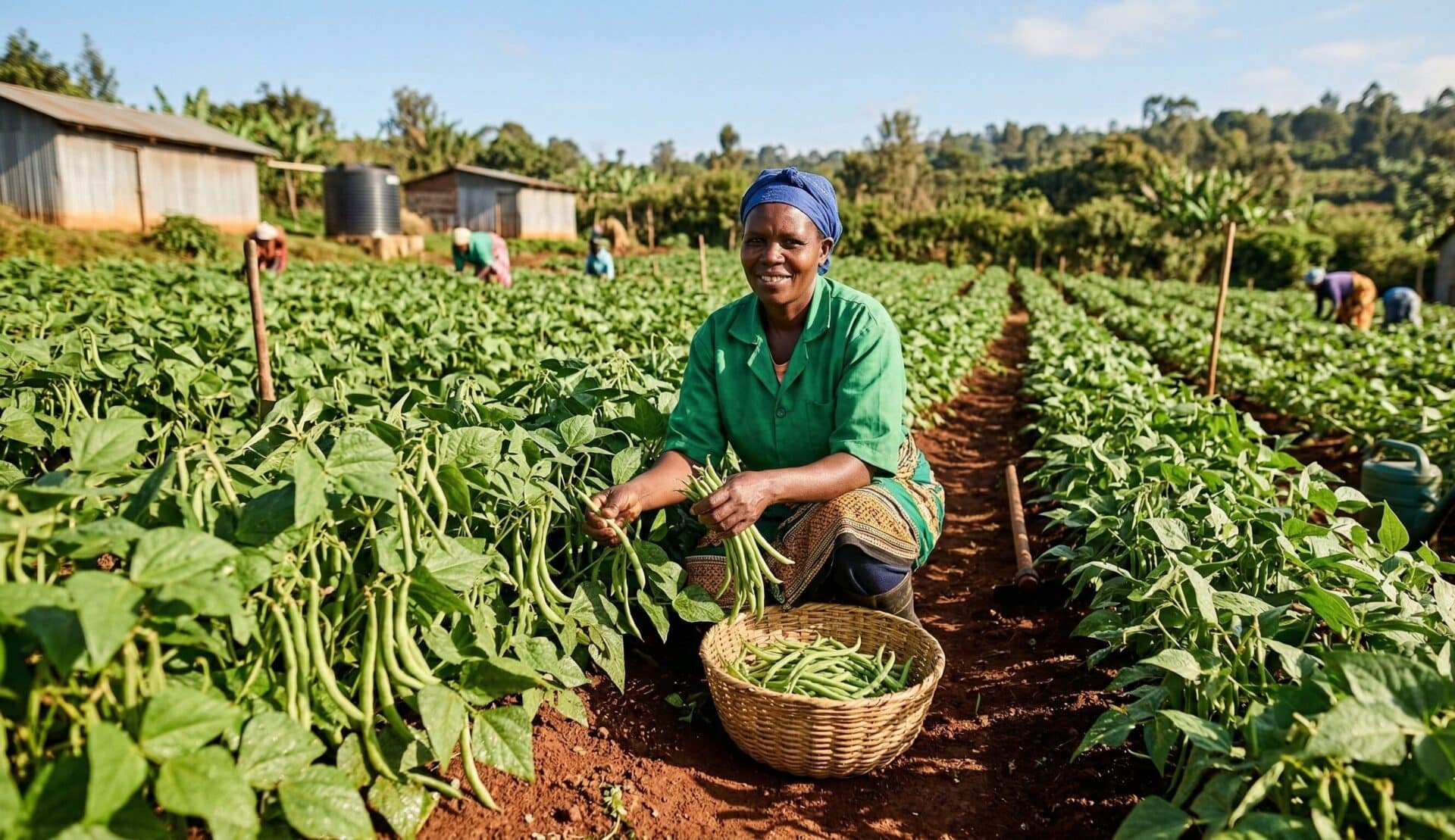
French beans are one of Kenya’s most important horticultural export crops. Kenya is consistently among the top three suppliers of fresh French beans to the European market, exporting over 35,000 metric tonnes annually to buyers in the UK, Netherlands, France, and Germany. For smallholder farmers in Central Kenya, the Rift Valley, and Eastern Kenya, French bean farming represents one of the most accessible pathways into export agriculture — with short growing cycles of 45 to 60 days and year-round demand from international buyers.
Yet despite this strong market position, the majority of Kenyan French bean farmers still sell to middlemen or large exporters at prices of KES 25 to KES 40 per kilogram. Farmers and cooperatives that achieve direct export certification and access international buyers directly receive KES 80 to KES 140 per kilogram for the same produce. The gap between these two prices is not quality. It is certification, compliance, and market access knowledge.
This guide covers everything a Kenyan French bean farmer, cooperative, or exporter needs to know to access international markets directly — from GLOBALG.A.P certification requirements through to finding buyers and managing export logistics.
Farmers growing other export crops should also read our complete guides on avocado export from Kenya, mango export from Kenya, and passion fruit export from Kenya. For full certification requirements see our complete GLOBALG.A.P certification guide for Kenyan farmers.
Why French Bean Export Certification Matters
French beans are classified as a high-risk fresh produce category by European food safety authorities. They are consumed raw or lightly cooked, meaning any pesticide residues, microbial contamination, or food safety failure reaches the consumer directly. This makes European buyers extremely rigorous in their supplier requirements for French beans — more so than for many other produce categories.
The European Union’s rapid alert system for food and feed — RASFF — regularly records notifications for Kenyan fresh produce including French beans for pesticide Maximum Residue Limit exceedances. Every RASFF notification damages Kenya’s reputation as a supplier country and results in increased border inspection frequencies that affect all Kenyan exporters. Individual farms that cause notifications face immediate delisting from buyer approved supplier lists.
GLOBALG.A.P certification is the baseline requirement for all European buyers of Kenyan French beans. Without certification, a Kenyan farm or cooperative cannot access supermarket supply chains regardless of their production volume or quality. Beyond GLOBALG.A.P, many UK buyers additionally require GRASP — the GLOBALG.A.P Risk Assessment on Social Practice — covering worker welfare standards. Some buyers require additional schemes including Spring and Tesco Nurture for UK supermarket supply.
The 7 Export Requirements Every Kenyan French Bean Farmer Must Meet
1. Farm Registration with the Horticultural Crops Directorate
Every farm supplying produce for export from Kenya must be registered with the Horticultural Crops Directorate under the Ministry of Agriculture. Farm registration is a legal requirement and is verified by the Kenya Plant Health Inspectorate Service during phytosanitary inspection. Unregistered farms cannot obtain phytosanitary certificates for export shipments.
2. GLOBALG.A.P Certification
GLOBALG.A.P certification for French beans covers all stages of production from site selection through to post-harvest handling. The standard assesses worker health and safety, pesticide management, water quality, soil management, waste management, environmental compliance, and traceability. French bean farms must achieve full compliance on all Major Must requirements and at least 95 percent compliance on Minor Must requirements before certification is granted.
For smallholder French bean farmers, group certification under GLOBALG.A.P Option 2 through a producer organisation is the standard route. Read our complete GLOBALG.A.P certification guide for full details on costs, timelines, and the step by step certification process in Kenya.
3. GRASP Assessment for UK Markets
Most UK supermarket buyers — including Tesco, Marks and Spencer, Sainsbury’s, and Waitrose — require GRASP alongside GLOBALG.A.P. GRASP assesses social compliance covering worker wages, working hours, freedom of association, grievance procedures, and gender equality. GRASP is conducted as an add-on to the GLOBALG.A.P audit and does not require a separate audit visit, but does require specific records and worker interview processes to be in place.
4. Strict Pesticide Management and MRL Compliance
Pesticide management is the single most critical compliance area for French bean export. The European Union enforces Maximum Residue Limits for over 500 pesticide active ingredients on French beans, and limits for some active ingredients are set at the limit of quantification — effectively zero tolerance. A single shipment exceeding an MRL results in RASFF notification, rejection of the consignment, and suspension from the buyer’s approved supplier list.
French bean farms must use only pesticides registered for use on French beans in Kenya, strictly observe all pre-harvest intervals, maintain complete spray records for every application, and commission residue testing on produce before major export shipments. Pesticide record keeping is the area most frequently cited in GLOBALG.A.P audit non-conformances for Kenyan French bean farms.
5. Water Quality Testing
Water used for irrigation and post-harvest washing of French beans must be tested for microbiological contamination — specifically E. coli and total coliforms — by an accredited laboratory. Water quality test results must be within acceptable limits before certification is granted. For farms using surface water sources including rivers and dams, testing frequency is higher than for borehole or piped water sources. Allow three to four weeks for laboratory results when planning your certification timeline.
6. Post-Harvest Handling and Cold Chain
French beans are highly perishable and must be handled and cooled rapidly after harvest to maintain quality and shelf life for export. Produce must be harvested in the early morning, transported to the packhouse within four hours of harvest, graded and packed in a clean hygienic facility, and pre-cooled to below 8 degrees Celsius before loading into refrigerated containers. Cold chain failures after harvest are a leading cause of quality rejections at destination markets.
Packhouses handling French beans for export must meet GLOBALG.A.P hygiene requirements including cleanable floor and wall surfaces, separate areas for raw and packed produce, pest control programmes, foreign body prevention measures, and documented cleaning and sanitation records.
7. Export Documentation
Every French bean export shipment from Kenya requires a phytosanitary certificate issued by KEPHIS after physical inspection of the consignment, a certificate of origin, a packing list, and a commercial invoice. For EU shipments, a health certificate covering pesticide residue testing may also be required depending on the current inspection frequency applied to Kenyan produce. Allow adequate time for KEPHIS inspection — schedule inspections at least 48 hours before the planned departure time.
📊 Export Readiness Tool for French Bean Farmers
Before beginning GLOBALG.A.P certification, most farms conduct a pre-audit assessment to identify compliance gaps.
Our Kenya Farm Audit Checklist covers:
- All 8 GLOBALG.A.P audit areas
- Critical, Major & Minor compliance checks
- Pesticide record templates
- Traceability system templates
- Corrective action planning sheet
Step-by-Step Process to Get Your French Bean Farm Export-Ready
Step 1 — Pre-Audit Farm Assessment (Month 1)
Conduct a comprehensive gap analysis of your farm against all GLOBALG.A.P requirements. Assess your pesticide storage facilities, spray equipment calibration records, worker welfare provisions, water sources and irrigation infrastructure, and post-harvest handling facilities. Document every gap with a priority classification and assign corrective actions with realistic completion deadlines. Our Kenya Farm Audit Checklist covers all GLOBALG.A.P audit areas in the format used by accredited certification body auditors.
Step 2 — Corrective Action Implementation (Months 2–3)
Address all identified gaps systematically. Commission water quality testing immediately — results take three to four weeks. Establish your pesticide record system and train all spray operators. Upgrade chemical storage facilities — bunding, lockable door, ventilation, emergency eyewash. Implement worker welfare requirements — sanitation facilities, first aid kits, PPE, grievance procedure. Document all corrective actions as you complete them.
Step 3 — Record System Establishment (Month 2–3)
French bean export requires comprehensive record keeping covering every farm operation. Establish records for soil management activities, irrigation water use, fertiliser applications, pesticide applications including operator name, product, dose, and pre-harvest interval, harvest records with field blocks and dates, and worker training attendance. Records must be legible, signed, and retained for a minimum of two years.
Step 4 — Internal Audit (Month 3–4)
Conduct a full internal audit against the GLOBALG.A.P checklist. Test your traceability system — pick a packed box of French beans and trace it back to the specific field, harvest date, and spray records for that block. Verify all corrective actions are fully implemented. Prepare your complete document file — every required record organised and immediately accessible for the certification auditor.
Step 5 — Certification Audit (Month 4–5)
Schedule your GLOBALG.A.P certification audit with an accredited certification body. In Kenya, accredited bodies for French bean certification include SGS Kenya, Bureau Veritas, and Kiwa. The audit covers a physical farm inspection, packhouse inspection, review of all documentation, and worker interviews. Allow two to three days for the audit process depending on farm and group size.
Step 6 — Market Access (Month 5+)
Once certified, develop your supplier profile highlighting your certification status, production volumes, growing seasons, and quality specifications. Approach buyers directly or through a market linkage consultant. Your GLOBALG.A.P GGN number is the first thing buyers will verify — include it in all commercial communications. Farmers in Kiambu can work with our agricultural consultants in Kiambu for on-site certification support.
Need Help Preparing for Certification?
The Agrosocial Starter Kit contains everything needed to prepare a farm for certification including:
- Farm audit checklist
- Certification preparation guide
- Farm record templates
- Export market access guide
- Funding proposal templates
Export Markets for Kenyan French Beans
The United Kingdom is the largest single destination market for Kenyan French beans. Kenyan produce benefits from established logistics routes, strong Kenyan diaspora consumer demand, and long-standing relationships between Kenyan cooperatives and UK supermarket chains. Key buyers include Marks and Spencer, Waitrose, Tesco, and Sainsbury’s, all of whom source Kenyan French beans through established importer partnerships.
The Netherlands is the primary European gateway for Kenyan French beans entering continental European markets. Dutch importers and wholesalers distribute to retailers across Germany, France, Belgium, and Scandinavia. Rotterdam-based traders including Nature’s Pride and Univeg handle significant volumes of Kenyan French beans year-round.
France maintains strong direct import relationships with several Kenyan cooperatives, particularly for fine beans and extra fine bean grades. French buyers tend to pay premium prices for consistent quality and reliable supply from certified sources.
The domestic premium retail market in Kenya — Carrefour, Naivas, and QuickMart — provides a valuable supplementary market for certified French bean producers and an important training ground for the quality consistency and record keeping discipline that export buyers require. Our Nairobi agricultural consultants can support farms supplying the domestic premium retail market as a first step towards export certification.
How Much Does French Bean Export Certification Cost in Kenya?
The total first-year investment for GLOBALG.A.P group certification for a Kenyan French bean producer organisation with 30 to 50 member farmers typically ranges from KES 400,000 to KES 750,000 covering all preparation, system development, laboratory testing, and certification audit costs.
Pre-audit assessment and compliance system development with professional consultancy support typically costs KES 150,000 to KES 300,000 depending on the starting compliance level and group size. The certification body audit fee for group certification ranges from KES 120,000 to KES 250,000 depending on group size and certification body. Laboratory testing — water quality, soil analysis, produce residue testing — adds KES 30,000 to KES 80,000. The annual GLOBALG.A.P registration fee is approximately USD 200 to USD 400 for producer organisations.
On a per-farmer basis within a group certification structure, the total first-year cost typically ranges from KES 15,000 to KES 30,000 per member farmer — a modest investment against the price premium available to certified exporters. A farmer producing 500 kilograms of French beans per month and moving from a middleman price of KES 35 per kilogram to a direct export price of KES 100 per kilogram generates an additional KES 32,500 per month — recovering the entire certification investment within the first export month.
Common Mistakes Kenyan French Bean Exporters Make
The most costly and common mistake is pesticide MRL exceedance. This occurs most frequently when farmers use unregistered pesticides, apply registered pesticides at above-label rates, or harvest before the pre-harvest interval has elapsed. A single MRL exceedance can result in the loss of an entire export season’s income and permanent removal from a buyer’s supplier list. The solution is a strictly enforced pesticide management programme with mandatory pre-harvest residue testing before major shipments.
The second most common mistake is post-harvest cold chain failure. French beans harvested in hot conditions without rapid cooling lose shelf life quickly and arrive at destination markets below buyer specification. Farms without adequate pre-cooling facilities should not attempt direct export — post-harvest infrastructure must match the export commitment.
Third is inconsistent grading. Export buyers specify French bean grades precisely — length, diameter, straightness, and freedom from defects. Inconsistent grading leads to quality rejections, price adjustments, and buyer complaints. Investing in proper grading training and equipment before beginning export supply prevents this problem entirely.
Fourth is poor communication with buyers. Export relationships depend on reliable communication about supply volumes, quality issues, and logistics. Farms that go silent when problems arise damage their buyer relationships permanently. Transparent and proactive communication when challenges occur protects long-term commercial relationships.
Frequently Asked Questions
How long does GLOBALG.A.P certification take for a Kenyan French bean farm?
Most farms complete the preparation and certification process within 3 to 5 months depending on their starting compliance level. Farms with professional pre-audit support and no major infrastructure gaps can achieve certification in as little as 3 months. See our GLOBALG.A.P certification guide for a full step by step timeline.
Can individual smallholder farmers get certified for French bean export?
Individual smallholder certification is possible but expensive relative to the farm size. Group certification through a registered producer organisation or cooperative is the standard and most cost-effective route for smallholder farmers. A group of 20 or more farmers sharing certification costs reduces the per-farmer investment significantly while providing the collective supply volumes that export buyers require.
What French bean grades do export buyers require?
The most commonly exported grades from Kenya are fine beans (6–8mm diameter) and extra fine beans (under 6mm diameter). Bobby beans (over 8mm diameter) are also exported but at lower price points. Buyers specify minimum and maximum pod length — typically 80mm to 130mm — and require produce free from blemishes, pest damage, and mechanical damage.
How often do French bean farms need to be re-certified?
GLOBALG.A.P certification must be renewed annually. The annual renewal involves a full re-audit of the farm and all required documentation. Maintaining complete and up-to-date records throughout the year is essential for efficient annual renewal audits.
What pesticides are banned for use on French beans for export to Europe?
A significant number of pesticide active ingredients are either banned in the EU or subject to very low MRL limits on French beans. Organophosphate insecticides, certain fungicides, and several older chemistry insecticides that remain registered in Kenya are not acceptable for use on export French beans. Farms must consult the EU pesticide database and their certifying agronomist before applying any pesticide to export crops.
Which certification bodies operate in Kenya for French bean GLOBALG.A.P certification?
Accredited certification bodies operating in Kenya for GLOBALG.A.P fresh produce certification include SGS Kenya, Bureau Veritas Kenya, Kiwa, and Intertek. Certification body fees vary — it is worth obtaining quotes from at least two bodies before committing. Ensure the certification body you select is accredited specifically for the GLOBALG.A.P Integrated Farm Assurance standard covering fruits and vegetables.
How Agrosocial Services Can Help Your French Bean Operation
Agrosocial Services Limited provides comprehensive export certification support for French bean farmers, cooperatives, and producer organisations across Kenya. Our team has supported farms through GLOBALG.A.P, GRASP, and additional buyer scheme certification processes, and understands the specific compliance requirements of major UK and European supermarket buyers. We provide on-site support throughout Kenya including Kiambu, Nakuru, Meru, and Machakos counties.
Our Kenya Farm Audit Checklist is the most comprehensive pre-audit preparation tool available for Kenyan fresh produce farms — used by farm managers and consultants to systematically prepare farms for certification audits. Our Agrosocial Starter Kit includes the audit checklist alongside a complete certification guide, funding proposal template, and international buyer outreach framework.
Contact Agrosocial Services Limited on WhatsApp at 0725042234 or email info@agrosocialservices.co.ke to discuss your French bean operation’s certification and export readiness.
Ready to Export Your French Beans?
Download our Kenya Farm Audit Checklist — the exact tool used by consultants to prepare farms for GLOBALG.A.P certification and export readiness. Or speak directly with our certification advisors on WhatsApp.