
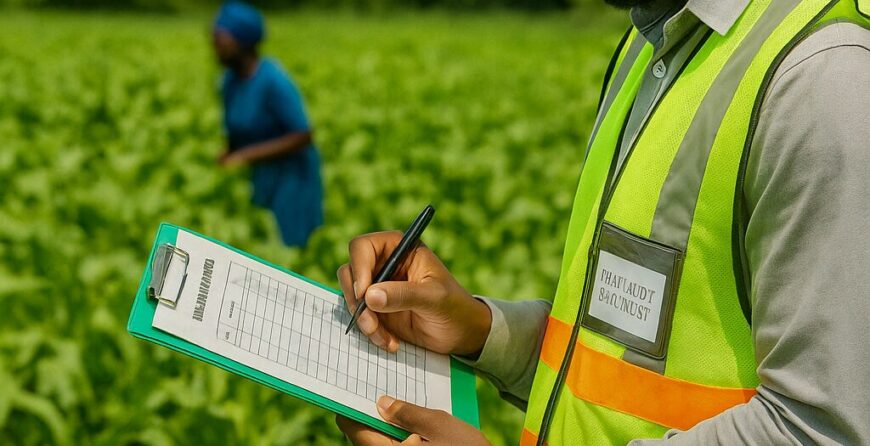
Introduction
Farm audits in Kenya are now a critical requirement for certification, market access, and sustainability compliance. But many agribusinesses still fail them — not because they lack resources, but due to avoidable mistakes. In this post, we’ll cover 7 farm audit mistakes and how you can avoid them to pass with confidence.
1. Poor Record Keeping
Auditors want proof. If your input use, harvest data, or staff records are missing or disorganized, you risk automatic failure. Always keep clean, up-to-date records — digital or printed.
2. Non-Compliance with Safety Standards
Many farmers ignore safety protocols — no PPE, exposed chemicals, poor waste disposal. These are red flags. Invest in safety gear and train your team.
3. Ignoring Traceability
From seed to market, can you trace your product’s journey? Auditors expect traceability maps, batch logs, and labeling. If you can’t prove origin, you lose credibility.
4. Not Following SOPs
Standard Operating Procedures (SOPs) aren’t decorations — they must be followed. Whether it’s irrigation, spraying, or harvesting, document and display your SOPs clearly.
5. No Pre-Audit Assessment
Many farms go straight to audit without preparation. This is like sitting for an exam you never revised for. Use our Kenya Farm Audit Checklist to assess and fix gaps before the big day.
6. Staff Not Trained or Informed
Auditors often interview your workers. If they don’t know your farming practices or policies, your audit score drops. Include regular refresher trainings and basic compliance education.
7. Disorganized Farm Layout
Audits aren’t just about paperwork. If your farm looks chaotic — poor signage, unclear waste zones, mixed chemical storage — it shows poor management.
Conclusion
Passing a farm audit in Kenya is not just about ticking boxes. It’s about building a farm system that’s audit-ready year-round. Want to increase your success rate?